Home / Battery for solar
A battery for the solar system you already have
Your midday PV surplus flows into the grid at the feed-in price and in the evening you buy the same electricity back for more. An added battery captures that difference. The key is to find out first what your inverter allows.
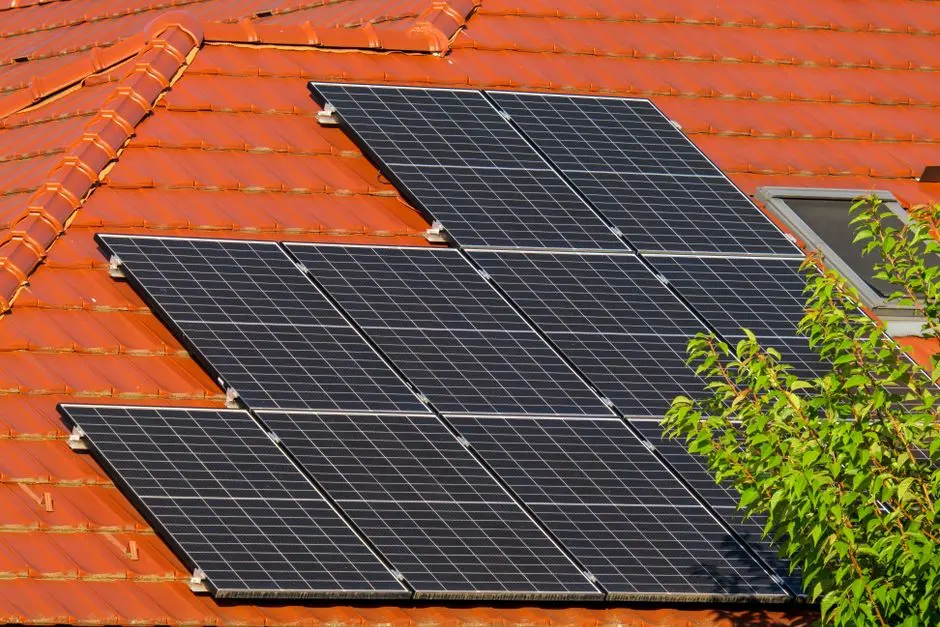
Why adding a battery makes sense now
Many family houses installed solar in 2022 and 2023, often without a battery or with a small one. Feed-in prices for surplus electricity have dropped significantly since then, while the price of grid electricity stayed high. The bigger the gap between what you get for your surplus and what you pay in the evening, the more it pays to store electricity and use it at home.
A battery for existing PV needs no new panels and no work on the roof. The work happens in the utility room, at the distribution board and the inverter.
Hybrid or grid inverter: what do you have
Depending on the inverter type, one of two routes is chosen:
- A hybrid inverter already has a battery input. A compatible battery from the same manufacturer or an approved combination, setup and inspection are enough. This is the simplest and usually the cheapest option.
- A grid (on-grid) inverter cannot take a battery. A battery system with its own inverter is added on the AC side (AC coupling), which measures the surplus and charges from it. It works with most brands.
A photo of the inverter label and the distribution board is all we need. From that we tell you which route is possible and whether the inverter needs to be replaced at all.
How big a battery for your PV
Two numbers decide: how much electricity you use from afternoon to morning and how much surplus your PV produces on an ordinary sunny day. A battery the roof cannot charge is needlessly expensive. A small battery fills up by noon every day and the rest flows into the grid again.
The capacity calculator gives a rough figure. The actual design is based on hourly production and consumption data from your grid operator and inverter.
What installation and paperwork involve
- checking the inverter, distribution board and battery location (ventilation, temperature, access)
- designing capacity, power and wiring, including separate backup circuits if you want backup
- installation, electrical inspection report and control setup
- notifying the grid operator of the change to the generating plant and storage, we prepare the documents
Installing a home battery usually takes one day. The longest part tends to be battery delivery and the grid operator process.
Questions we get asked
Will I lose the inverter warranty if I add a battery?
If a combination approved by the inverter manufacturer is used, the warranty remains. That is why we check the inverter model and the list of compatible batteries first.
Can I add a battery to PV that received a subsidy?
Usually yes, but it is worth checking the terms of the original subsidy so the change does not breach anything. We go through them with you before ordering.
Can the battery be expanded later?
With most modular systems yes, by adding another module of the same series. It is sensible to plan for it in the design, because modules may not be available years later.
Send us your consumption, we will design the battery
Phone and e-mail are enough to start. We reply within 24 hours on working days, ask for the data we need and send a proposal with the capacity, inverter compatibility and installation steps. Free of charge and without obligation. Prefer to talk? 775 654 443