Home / BESS for business
BESS for businesses and operations
A company battery does not pay for itself only from stored rooftop electricity. Shaving consumption peaks, lowering the reserved capacity or making sure production does not stop during an outage often brings more. Your load data shows which of these applies to you.
What companies use BESS for
- Peak shaving. The battery supplies power at moments when machine start-ups, compressors or car charging coincide, and grid draw stays below a set threshold.
- Lower reserved capacity. When the battery covers the peaks, the reserved capacity agreed with the grid operator can be reduced, and the fixed part of the bill with it.
- Self-consumption from PV. Surplus from the company PV is stored for the afternoon shift or weekend refrigeration.
- Backup of critical circuits. Servers, cooling, production control or emergency lighting ride through an outage without stopping operations.
- Buying in cheap hours. With a dynamic energy price the battery charges when electricity is cheap and discharges in expensive hours.
The design starts with 15-minute data
For a company, neither capacity nor power is estimated. The basis is interval metering of consumption in 15-minute steps, ideally for a whole year, plus PV production data if you have it. They show how often and how long peaks last, how much energy is needed to cover them and what power the battery must deliver.
The result is a design of power in kW and capacity in kWh, a simulation of operation on your data and an overview of which benefits are real and which are not. Sometimes a smaller battery with high power comes out, sometimes the opposite.
Container, cabinets or utility room
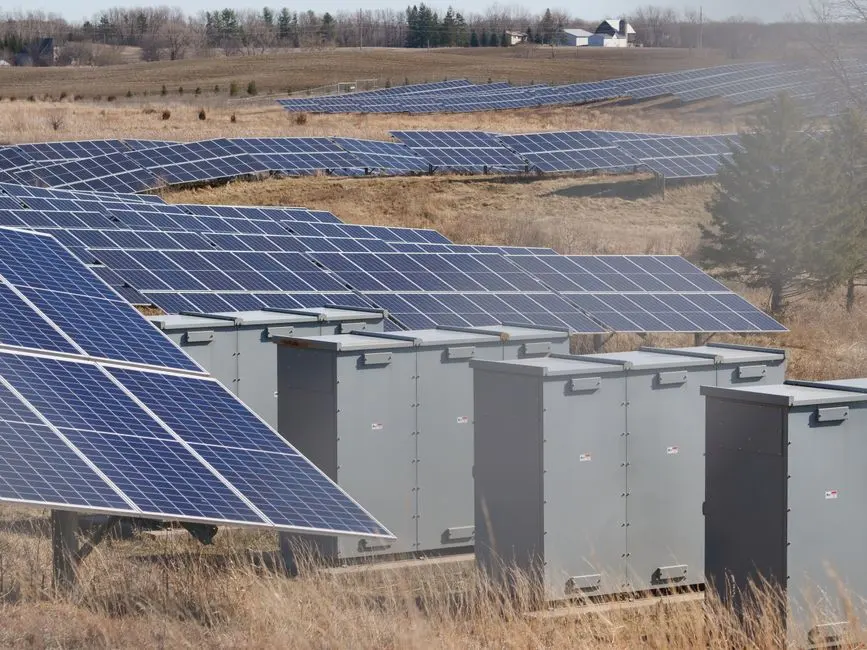
Smaller company storage in the tens of kWh is installed in a utility room as a set of cabinets. Larger systems in the hundreds of kWh up to several MWh are usually outdoor cabinets or a container on a concrete base. Fire safety, service access, cooling and the route to the switchboard are part of the design.
Control and metering
A company BESS is controlled by an energy management system (EMS) that decides in real time when to charge and when to discharge. We set it to your priorities: the draw threshold, a backup reserve and rules for PV. Operation is visible in a clear portal.
What we need to start
- 15-minute consumption data (from the grid operator portal or your supplier)
- current reserved capacity and the main breaker before the meter
- PV output and data, if you have PV
- which circuits should survive an outage
Questions we get asked
For what size of company does BESS make sense?
The load profile matters more than company size. It makes sense where there are pronounced short peaks, high reserved capacity, own PV with surplus or operations that must not stop during an outage.
Is there a subsidy for a company battery?
Subsidy calls for businesses open from time to time, most recently from the Modernisation Fund. We follow the current situation and state in the proposal whether a call is open.
How long does the project take?
Weeks for smaller systems in a utility room, months for container solutions, mainly due to equipment delivery, design and grid connection. The schedule is part of the proposal.
Send us your consumption, we will design the battery
Phone and e-mail are enough to start. We reply within 24 hours on working days, ask for the data we need and send a proposal with the capacity, inverter compatibility and installation steps. Free of charge and without obligation. Prefer to talk? 775 654 443