Home / Home storage
Home battery storage for a family house
A battery in a house has one job: shift electricity from your PV from midday to the evening and night. A well-designed one can also keep the house running during an outage and work with a heat pump and car charging.
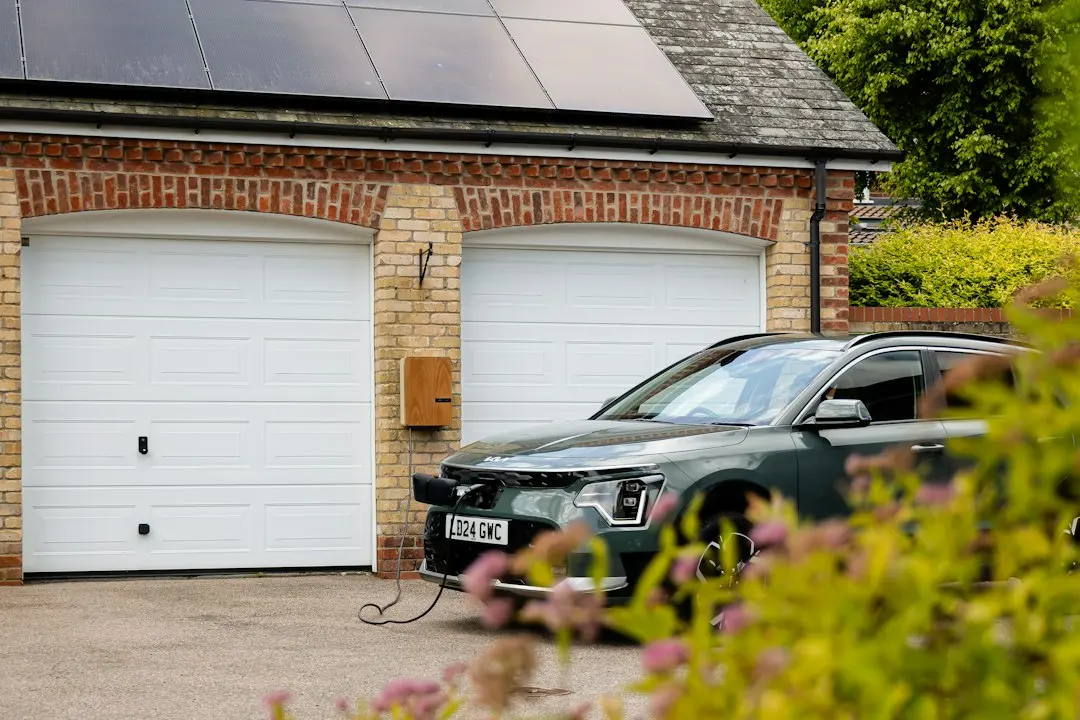
How many kWh should a home battery have
An ordinary family house without a heat pump uses roughly half of its daily consumption in the evening and at night. Households with a heat pump or an electric car use more and it changes with the season. That is why home battery capacity is typically between 5 and 15 kWh.
A sensible design is based on data, not a table. We look at hourly consumption for a whole year and at the output of your PV. We show you what share of consumption the battery covers in summer and in winter, so there is no disappointment in December.
For a first idea, use the capacity calculator.
Power matters as much as capacity
Capacity (kWh) says how much electricity fits into the battery. Power (kW) says how much it can deliver at once. When the oven, dishwasher and heat pump run together in the evening, a low-power battery covers only part of it and the rest comes from the grid. For houses with large appliances we watch both.
LFP: why home batteries use this chemistry today
Lithium iron phosphate (LFP) cells are the standard in home storage. They have a long cycle life, stable chemistry with a low risk of overheating and need no cobalt. Manufacturers usually give a 10-year warranty with guaranteed remaining capacity. We state the terms of the specific model in the proposal.
Backup during power cuts
A battery by itself does not power the house during an outage. It needs an inverter with a backup function and separate backup circuits in the distribution board. Typically the fridge, boiler or circulation pumps, lighting, internet and sockets in the study are backed up. The whole house including a heat pump only where inverter and battery power allow it.
If you want backup, say so at the start. It affects the inverter choice, wiring and capacity, because it is wise to keep part of the battery as a reserve.
Heat pump, electric car and dynamic tariff
A battery does more when it is controlled together with other appliances. Surplus can heat water or charge the car during the day, or in winter the battery can charge from the grid during cheap hours if you have a dynamic tariff. Setting up the control is part of the handover.
Questions we get asked
Where is the battery installed?
In a dry room at roughly 5 to 30 °C, typically a utility room, garage or basement. Not in a living room and not in direct sunlight. We check the manufacturer's specific requirements during the design.
Is the battery noisy?
The battery itself practically not. The inverter fan may be audible at higher power, so we do not put it next to a bedroom.
Is a battery worth it without solar?
Only in exceptional cases, for example with a dynamic tariff and a large price spread during the day, or purely as backup. It usually makes sense only with PV.
Send us your consumption, we will design the battery
Phone and e-mail are enough to start. We reply within 24 hours on working days, ask for the data we need and send a proposal with the capacity, inverter compatibility and installation steps. Free of charge and without obligation. Prefer to talk? 775 654 443