BESS for business: peak shaving and reserved capacity
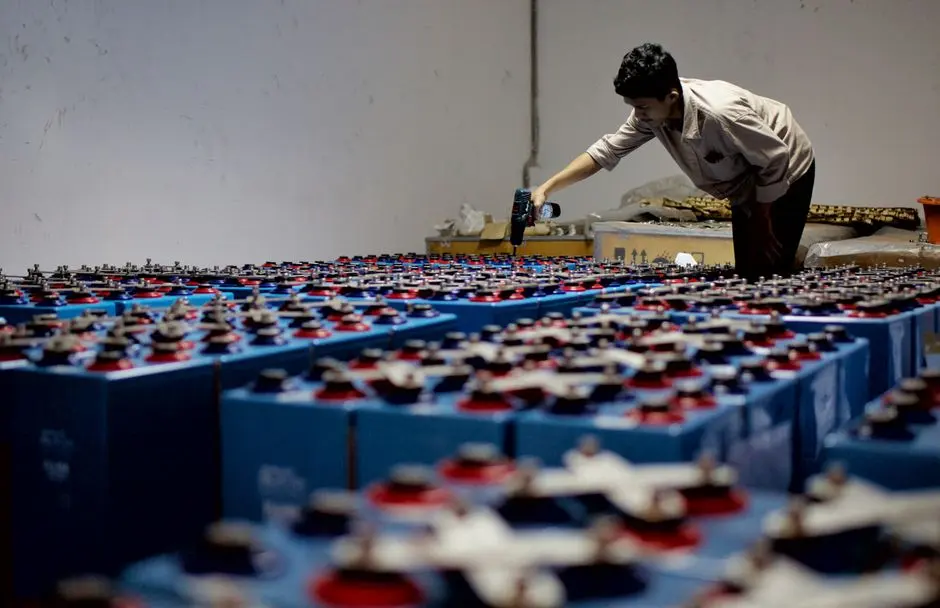
For companies the main benefit of a battery is often elsewhere than for family houses. It is not only about stored electricity but about power at the right moment. That is why a company BESS is designed from the peaks, not from capacity.
Published 18 October 2026
Why short peaks cost a company money
Besides the energy consumed, a company drawing from the grid pays for reserved capacity, the power the grid operator keeps available for it. It is set according to the highest draws and exceeding it is charged. It is often determined by only a few short moments a month when machine start-ups, compressors, heating or company car charging coincide.
How a battery shaves peaks
The battery control system monitors the load in real time. When it approaches the set threshold, the battery starts supplying power to the internal network and grid draw stays below the limit. Between peaks the battery recharges, ideally from its own PV or in cheap hours. This is called peak shaving.
As a result, reserved capacity can be reduced with the grid operator, or an increase can be avoided when operations expand, for example when EV chargers are added.
What 15-minute data shows
The basis of the design is interval metering in 15-minute steps over the longest possible period. The data shows:
- how many peaks a month exceed the chosen threshold and how high they are
- how long they last, i.e. how much energy is needed to cover them
- whether there is enough time between them to recharge
- how PV production compares with the load
Surprisingly often the result is a battery with high power and smaller capacity, because the peaks are high but short.
More benefits from the same battery
One battery can do several things if the control is set up well: shave peaks, store PV surplus, buy in cheap hours and keep a reserve for backing up critical circuits. Priorities are set according to what brings the company the most and can change.
When BESS does not make sense
If a company's load is flat with no pronounced peaks, reserved capacity matches reality and the company has neither its own PV nor a need for backup, a battery will hardly pay off. We see that in the data too and tell you straight away.
More about solutions for companies on the page BESS for businesses and operations.
Send us your consumption, we will design the battery
Phone and e-mail are enough to start. We reply within 24 hours on working days, ask for the data we need and send a proposal with the capacity, inverter compatibility and installation steps. Free of charge and without obligation. Prefer to talk? 775 654 443